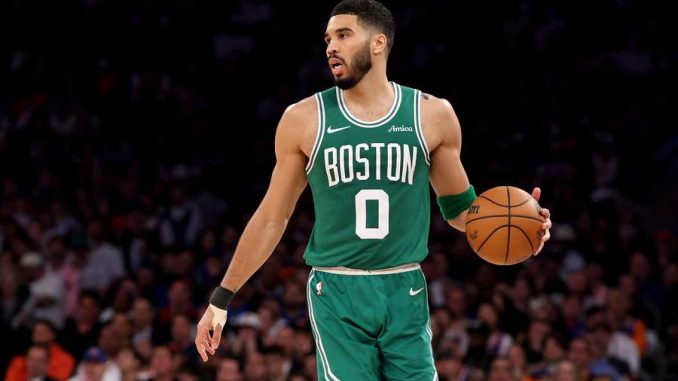
Viral Claim About Jason Tatum Sparks Debate, Lacks Credible Evidence
A viral social media post alleging that Jason Tatum refused to wear a rainbow-themed helmet in support of the LGBTQ community—and criticized what he called a “woke agenda”—has ignited widespread discussion online. However, there is currently no credible evidence to support the claim, and no reputable news organization has verified the story.
The narrative, which has circulated rapidly across platforms, portrays the Boston Celtics star as taking a firm stand against a symbolic gesture tied to inclusivity efforts. The quote attributed to Tatum—“No amount of fame or sponsorships will ever make me betray my values”—has been widely shared, often without sourcing or context. Despite its traction, journalists and fact-checkers have found no record of Tatum making such a statement.
Notably, the claim raises immediate questions about plausibility. Tatum is a professional basketball player in the National Basketball Association and has no known involvement in motorsports, where helmet-related controversies would typically arise. There is no documented event, race, or promotional activity linking him to such a scenario.
Major sports media outlets—including ESPN, The Athletic, and other established platforms—have not reported on the incident. In today’s media landscape, where even minor athlete controversies are quickly picked up and analyzed, the absence of coverage from credible sources strongly suggests the story may be fabricated or misleading.
This situation reflects a broader trend of misinformation involving high-profile athletes. False or exaggerated claims are often crafted to tap into ongoing cultural debates, using recognizable names to amplify reach and engagement. These posts frequently include emotionally charged language or polarizing themes, increasing the likelihood of shares before verification.
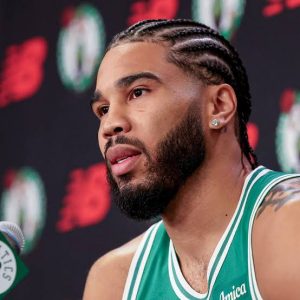
Throughout his career, Tatum has largely avoided public controversy. Known for his focus on performance and professionalism, he has built a reputation as one of the league’s premier talents. Off the court, he is also recognized for his community involvement and family-oriented public image. While he has participated in NBA-supported initiatives, he has not been associated with inflammatory public rhetoric.
The NBA itself has taken steps to promote inclusivity, including supporting LGBTQ awareness campaigns. Players have occasionally participated in themed events or worn symbolic gear, but such efforts are typically handled with discretion. There has been no recent league announcement or event that aligns with the scenario described in the viral claim.
Experts advise social media users to approach such stories with caution. Verifying information through trusted news organizations and checking for primary sources—such as official statements, interviews, or press releases—can help prevent the spread of false information. In cases like this, where a claim appears sensational but lacks substantiation, skepticism is warranted.
As of now, neither Jason Tatum nor representatives of the Boston Celtics have issued any statement addressing the rumor. Until credible evidence emerges, the claim remains unverified and should be treated as misinformation.
The rapid spread of this story underscores the challenges of the digital information age, where viral content can blur the line between fact and fiction. For public figures like Tatum, it also highlights the risks of having statements falsely attributed to them—particularly when those statements intersect with sensitive cultural issues.
Leave a Reply