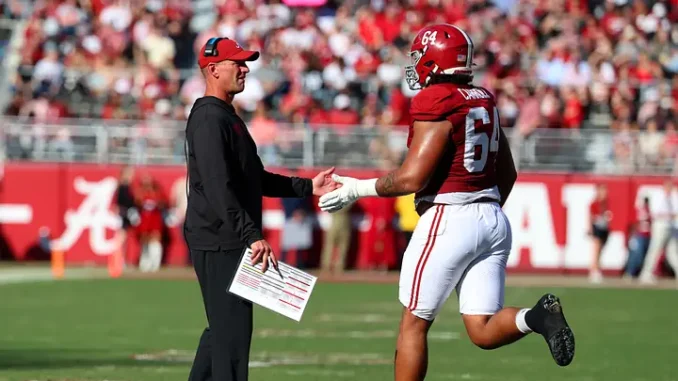
Game-Changer? Why the Protect College Sports Act Could Be a Huge Win for Kalen DeBoer and Alabama
The proposed Protect College Sports Act is generating significant discussion across college athletics, with many observers suggesting it could have far-reaching implications for programs like Alabama under head coach Kalen DeBoer. While the legislation has not yet become law, supporters believe it could provide greater stability during a period of rapid change in college sports.
Over the past few years, college athletics has undergone a dramatic transformation. The introduction of name, image, and likeness (NIL) opportunities, the transfer portal, and evolving legal challenges have reshaped recruiting and roster management. Coaches and athletic departments have been forced to adapt to a landscape that changes almost every offseason.
The Protect College Sports Act aims to establish a more consistent framework for college athletics by addressing several issues that have created uncertainty for schools, conferences, athletes, and governing bodies. Although the proposal continues to be debated, many within the sport believe greater clarity could benefit both players and programs.
For Alabama, the timing could be especially important. Kalen DeBoer took over one of college football’s most high-profile programs following the retirement of legendary coach Nick Saban. With expectations remaining as high as ever in Tuscaloosa, DeBoer has been tasked with maintaining Alabama’s championship standard while navigating one of the most unpredictable eras in college football history.
Supporters of the legislation argue that a more standardized set of rules could make roster building more manageable. Instead of constantly adjusting to changing policies and legal rulings, coaching staffs could spend more time focusing on player development, recruiting, and on-field performance.
Recruiting could also be affected if the proposed legislation creates greater consistency nationwide. Programs like Alabama have traditionally thrived by attracting elite talent from across the country. A clearer regulatory environment may help coaches communicate expectations more effectively to recruits and their families.
Roster retention has become another major challenge throughout college football. With players able to transfer more freely than in previous years, maintaining continuity has become increasingly difficult for even the nation’s top programs. If the Protect College Sports Act introduces additional structure, some analysts believe schools may have an easier time planning for both the short and long term.
Financial certainty is another area frequently mentioned by supporters. Athletic departments continue adapting to new NIL realities while balancing budgets, scholarship commitments, and competitive expectations. A consistent national framework could reduce confusion and create a more predictable operating environment for universities.
Despite the optimism from some corners of the sport, the proposed legislation also has its critics. Opponents argue that any changes must continue to protect athletes’ rights and preserve the opportunities that have expanded through NIL and increased player mobility. Lawmakers and college sports leaders are expected to continue debating these issues before any final decisions are made.
For now, the Protect College Sports Act remains a proposal rather than established policy. However, its potential impact has already become a major talking point across college football. Should the legislation advance, programs like Alabama—and head coach Kalen DeBoer—could find themselves operating in a more stable and predictable environment as they pursue success in an increasingly competitive era of college athletics.
Leave a Reply