The narrative surrounding Alabama football ahead of the 2026 season feels unusually conflicted. For a program long defined by dominance and consistency, the Crimson Tide now find themselves caught between two labels: “underrated” and “overlooked.” Once automatic favorites in national conversations, Alabama is now being placed outside the top tier in several preseason rankings, sparking debate about whether the program is truly slipping—or simply being underestimated.
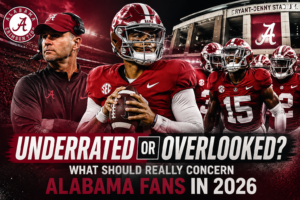
At the center of concern is the quarterback position. Replacing a proven leader is never easy, and Alabama enters the new season without a fully established starter who has consistently delivered at the highest level. While the talent is undoubtedly present, questions remain about decision-making under pressure, leadership in big moments, and the ability to command a high-powered offense in the Southeastern Conference. In a league where elite quarterback play often determines championship outcomes, this uncertainty is difficult to ignore.
Equally important is the performance of the offensive line. Last season exposed moments of vulnerability in both pass protection and run blocking, disrupting the rhythm of the offense. If those issues persist, it could limit Alabama’s ability to control games physically—a hallmark of its success over the years. Improvement in the trenches will be critical not just for offensive balance, but also for protecting a relatively inexperienced quarterback.
Beyond personnel concerns, there is also the reality of transition. Head coach Kalen DeBoer continues to shape the identity of the program following the end of its historic dynasty era. While the foundation remains strong, the psychological edge that once intimidated opponents is no longer guaranteed. Alabama is still respected, but it is no longer universally feared in the same way—and that subtle shift could have real implications in tight matchups.
However, not everything should raise alarm for Crimson Tide fans. In fact, several aspects of this team suggest that being labeled “overlooked” might actually work in Alabama’s favor. The defense, for instance, remains a significant strength. With experienced players in the secondary and a fast, disciplined unit overall, Alabama has the tools to slow down even the most explosive offenses in college football. A strong defense alone can keep the team competitive in every contest, buying time for the offense to find its rhythm.
Additionally, Alabama’s depth and recruiting pipeline continue to rank among the best in the nation. Even in years marked by transition, the program rarely rebuilds—it reloads. Young talent is constantly emerging, and breakout performances from lesser-known players could quickly reshape perceptions of the team’s overall strength.
Ultimately, the truth about Alabama in 2026 likely lies somewhere in between the extremes. The concerns are real, particularly at quarterback and along the offensive line. Yet the strengths—defensive stability, roster depth, and a culture of winning—remain firmly intact.
This balance of uncertainty and potential is what makes Alabama one of the most intriguing teams to watch this season. Whether the Crimson Tide prove to be underrated contenders or a program still finding its footing will be decided on the field. One thing is certain: overlooking Alabama has rarely been a safe bet, and this year may be no different.
Leave a Reply