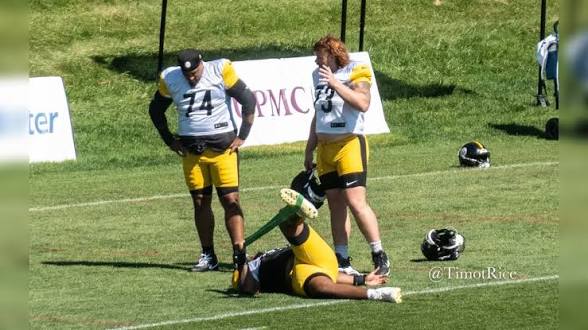
The Pittsburgh Steelers are taking a patient approach with rookie offensive lineman Gennings Dunker, and early signs from training camp suggest the organization believes that strategy could pay off in the long run. According to Steelers insider Mark Kaboly, Dunker is the “perfect guy for a redshirt year,” giving the young lineman time to develop without the immediate pressure of contributing on Sundays.
Dunker entered the NFL with plenty of intrigue after an impressive college career, where he showcased strength, physicality, and toughness in the trenches. While those traits helped him earn a spot on Pittsburgh’s roster, the jump from college football to the NFL is especially challenging for offensive linemen. The speed of the game, advanced pass-rushing techniques, and complex defensive schemes require time to master.
Kaboly believes Dunker fits the profile of a player who will benefit greatly from spending his rookie season learning behind experienced veterans. Rather than rushing him into meaningful snaps, the Steelers can allow him to improve his technique, footwork, and understanding of the offense while practicing against one of the NFL’s most competitive defensive fronts.
Pittsburgh has long valued player development, particularly along the offensive line. Several successful Steelers linemen have spent time learning before becoming starters, and the organization hopes Dunker can follow a similar path. Offensive line coach Pat Meyer will have the opportunity to refine Dunker’s mechanics and prepare him for a larger role in future seasons.
One of Dunker’s biggest strengths is his physical makeup. He possesses the size and power teams look for in an NFL tackle, allowing him to anchor effectively against bull rushes. Coaches have also praised his willingness to learn and his work ethic, two qualities that often determine whether young linemen eventually succeed.
However, there are still areas requiring improvement. Like many rookies coming from smaller programs, Dunker must adjust to facing elite edge rushers every day in practice. Improving his hand placement, balance, and pass-protection consistency will be essential if he hopes to compete for a starting job down the road.
The Steelers’ current depth at offensive tackle also works in Dunker’s favor. With established veterans handling the starting roles, Pittsburgh does not need to force the rookie into action before he is ready. Instead, he can focus on absorbing coaching, improving during practices, and gaining valuable experience during preseason games.
A redshirt year doesn’t mean a player lacks talent. Instead, it reflects the team’s confidence that patience will maximize the player’s long-term potential. Many successful NFL offensive linemen have benefited from spending their rookie seasons primarily developing before becoming reliable starters.
Kaboly’s assessment reflects that philosophy. Rather than evaluating Dunker solely on whether he contributes immediately, the focus is on where he could be one or two years from now. If his development stays on track, the Steelers could eventually have another dependable offensive lineman capable of protecting their quarterback and strengthening the running game.
For now, Dunker’s primary job is simple: continue learning, embrace coaching, and improve every day. If he does that, the Steelers may look back at his rookie season not as one spent on the sidelines, but as the foundation of a productive NFL career. Patience, after all, has often been the key ingredient in developing quality offensive linemen, and Pittsburgh appears committed to giving Gennings Dunker every opportunity to reach his full potential.
Leave a Reply