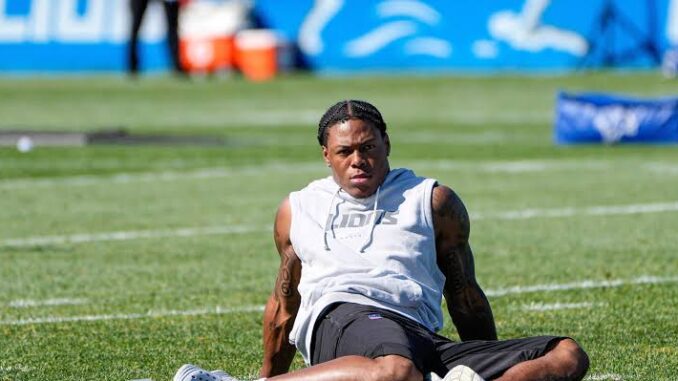
The Detroit Lions have one of the NFL’s most explosive offenses, and running back Jahmyr Gibbs is a major reason why. So when reports surfaced that Gibbs was participating in training camp as a “hold-in” rather than taking part fully in practice, it naturally raised questions among fans. But how concerned should the Lions be? At this stage, the answer is: probably not very.

A hold-in differs significantly from a holdout. Instead of refusing to report to camp, a player attends team meetings, works with coaches, and remains around the organization while limiting or avoiding on-field activities. It’s a strategy that allows players to protect themselves from injury while contract discussions continue.
For Detroit, the fact that Gibbs is present at camp is an encouraging sign. It suggests there is no major breakdown in communication between the player and the organization. Both sides appear interested in reaching an agreement without creating unnecessary drama.
Gibbs has quickly become one of the league’s most dynamic offensive weapons. Since entering the NFL, he has proven he can change games as both a runner and a receiver. His speed, vision, and ability to create explosive plays have made him a nightmare for opposing defenses and a cornerstone of offensive coordinator John Morton’s game plan.
Because of that importance, it’s understandable why Gibbs would want long-term financial security. Running backs often have shorter career peaks than players at other positions, making contract negotiations especially meaningful. Protecting his health while those discussions continue is a reasonable business decision.
From the Lions’ perspective, there is also little reason to rush. The front office has consistently emphasized building a sustainable roster while rewarding homegrown talent at the appropriate time. General manager Brad Holmes has earned a reputation for remaining patient during negotiations rather than making emotional decisions.
Another reason for optimism is Detroit’s depth at running back. Veteran David Montgomery remains one of the NFL’s most reliable power backs, giving the coaching staff flexibility during camp. Younger backs can also receive additional practice reps, allowing coaches to evaluate the roster while Gibbs’ workload is limited.
The biggest concern would arise only if the hold-in extends deep into the preseason or begins affecting Gibbs’ readiness for Week 1. Football conditioning is difficult to replicate outside of live practice, particularly for a player whose game relies on elite acceleration and quick cuts. Missing too much on-field work could slow his transition into the regular season.
However, history shows that many contract-related hold-ins are resolved before meaningful games begin. As long as negotiations continue and neither side becomes entrenched, there is every reason to believe a resolution can be reached.
Head coach Dan Campbell has built a culture centered on trust, accountability, and communication. Those qualities have helped the Lions navigate difficult situations in recent years without major distractions. There’s little indication that Gibbs’ current status threatens that culture.
For now, the proper concern level is moderate at most. It’s a situation worth monitoring because of Gibbs’ importance to Detroit’s offense, but there is no need for panic. Unless the negotiations stall for an extended period or Gibbs begins missing significant preparation time, Lions fans can remain confident that one of their biggest stars is likely to be back on the field when the games begin to count.
Leave a Reply