🚨 SHOCKING NFL UPDATE: Packers vs. Cowboys Game Faces Intense Officiating Spotlight After Controversial Referee Decisions — Fans Demand Answers Due To…
SHOCKING NFL UPDATE: Packers vs. Cowboys Game Faces Intense Officiating Spotlight After Controversial Referee Decisions — Fans Demand Answers Due To…
GREEN BAY, Wis. — The NFL’s officiating crisis has found its newest flashpoint, and this time it involves two of the league’s most storied franchises.
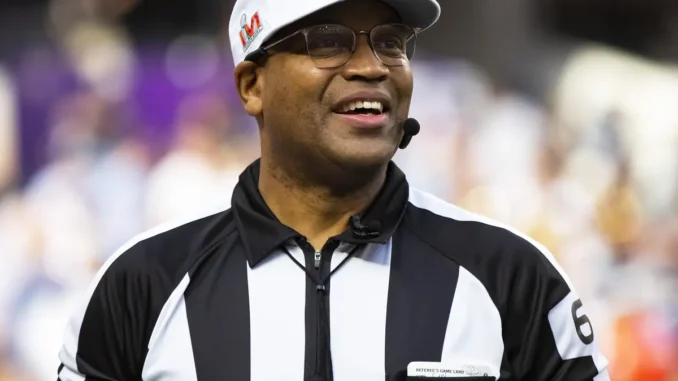
As the Green Bay Packers prepare to host the Dallas Cowboys in a prime-time Week 6 showdown, the game is being overshadowed by a firestorm of controversy surrounding referee Craig Wrolstad and his crew. Fans on both sides are demanding answers, and the league is under mounting pressure to address what many are calling a pattern of inconsistent and inexplicable calls that have plagued the 2026 season.
The Powder Keg
The tension surrounding this matchup is not merely about playoff positioning or NFC supremacy. It is about trust.
Wrolstad’s crew has officiated just two games this season, but the numbers are already raising eyebrows. In those two contests, his crew has thrown 28 penalties for 216 yards, including seven offensive holding calls and four neutral zone infractions. While those totals alone are not damning, the context is everything.
The Cowboys and Packers share a history scarred by officiating controversies that date back more than a decade. The infamous “Dez Caught It” play in the 2014 NFC Divisional Playoff—when officials overturned a Bryant reception at the goal line—remains a wound that has never fully healed in Dallas. For Cowboys fans, the sight of another crew with a questionable track record taking charge of a critical game against Green Bay feels less like coincidence and more like cruel cosmic repetition.
Now, with Wrolstad’s crew assigned to Sunday’s matchup, that history is colliding with the present in ways that have fans on edge.
The Bigger Crisis
But the Packers-Cowboys game is not an isolated incident. It is a symptom of a league-wide disease.
Just this week, fans watched in disbelief as a holding call on Jacksonville tight end Brenton Strange erased a Bhayshul Tuten touchdown against the Texans—a flag that even NFL insiders admitted appeared baseless. In the same game, a pass interference penalty on Travis Hunter drew immediate condemnation from former players and analysts alike, with Ryan Clark publicly stating, “I don’t like that call”.
The pattern is unmistakable. Officiating in 2026 has become a weekly referendum on the league’s competence, and the verdict is not favorable.
For the Packers, the frustration is personal. Safety Javon Bullard was flagged for taunting in Week 2 after what appeared to be routine post-play competition, sparking a broader debate about the league’s over-policing of player conduct. Sean Payton’s daughter, Meghan, publicly questioned whether Commissioner Roger Goodell’s leadership has pushed enforcement too far, and her sentiment resonated with a fanbase already weary of ticky-tack flags.
The Parsons Factor
Complicating matters further is the presence of Micah Parsons—or rather, his absence. The star edge rusher, traded from Dallas to Green Bay in a blockbuster deal, will not play in Sunday’s game due to injury. But his shadow looms large over the officiating conversation.
Throughout his career, Parsons has been vocal about what he perceives as systemic bias against defensive players. In a scathing press conference earlier this season, he accused officials of favoring offenses to inflate scoring.
“They won’t call offensive pass interference, but they’ll call defensive pass interference,” Parsons said. “We know what they’re trying to do. They want to load the points up so fans can be happy. They’ll call defensive holding, but they won’t call offensive holding. Let’s just wake up”.
Parsons’ comments have been validated by statistical anomalies. Despite being one of the league’s most dominant pass rushers, he has consistently ranked near the bottom in holding penalties drawn—a fact that former officials and analysts have struggled to explain away.
With Parsons sidelined, the Packers’ pass rush will be diminished. But his words will echo in the minds of every fan watching Wrolstad’s crew operate on Sunday night.
The Demand for Answers
What do fans want? The answers are as varied as they are urgent.
Some are calling for transparency: public grading of officials, released weekly, so that accountability is no longer hidden behind closed doors. Others want expanded replay review, including the ability to challenge pass interference and holding calls—changes that the NFL has resisted for years.
A smaller but growing faction believes the problem is deeper: that the league’s officiating is not merely incompetent but compromised, influenced by gambling interests or a desire to engineer entertaining outcomes. These accusations are unproven and largely unfounded, but their persistence speaks to a crisis of confidence that the NFL cannot afford to ignore.
The league did take one step this month, suspending referee Jeff Seeman for two games over “unprofessional conduct” in a Cardinals-Giants matchup. But one suspension does little to address the systemic issues that fans see every Sunday.
What’s at Stake
For the Packers and Cowboys, Sunday’s game is about more than a win. It is about legitimacy. In a season where the margin between contention and irrelevance is razor-thin, a single blown call can alter the trajectory of a franchise.
For the NFL, the stakes are even higher. Every controversial flag, every missed hold, every inexplicable pass interference penalty erodes the foundation of trust that makes the sport compelling. Fans can forgive mistakes. They cannot forgive the perception that the game is not being called fairly.
As kickoff approaches at Lambeau Field, all eyes will be on Craig Wrolstad and his crew. The players will play. The coaches will coach. But the officials will be the ones who determine whether Sunday night ends in celebration or controversy.
And after the week the NFL has had, nobody is expecting a quiet game.
Leave a Reply